

At the HWBP Dijkwerkersdag 2026, the annual event for professionals working on dike reinforcement, we were able to present the pilot results on better cost estimations for dike reinforcements using reference classes and AI.
The keynote at the start of the day clearly showed the scale of the challenge facing the Netherlands, and how climate change adds a further layer of complexity. In this context, better-substantiated cost estimates are of particular value.
Our session was introduced by Chris Vriends from HWBP. He explained how, last year, HWBP issued a market call to explore how AI could be applied in a useful and responsible way. Three parties were selected as a result of that exploration, and during Dijkwerkersdag we had the opportunity to present the results of this pilot.
In this pilot, we examined whether early-stage cost estimates could be better substantiated by using comparable projects, project-specific context, and machine learning.
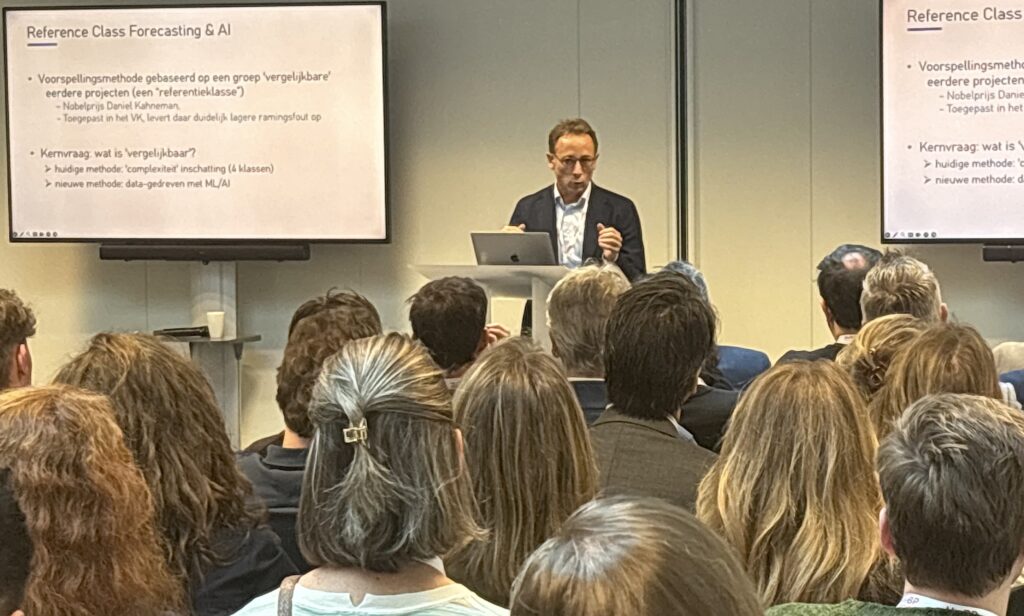
During the session, we showed how the RCF-AI approach helps make cost estimates not only more accurate, but also easier to explain.
The results presented show that this approach offers clear added value. In the validation, we found that the error in early-stage cost estimates could be reduced by approximately half compared with the initial estimates made by project teams.
In addition, the method provides insight into the factors that truly drive costs, the most comparable projects, and the range of possible outcomes.
During the presentation, we also demonstrated the tooling.
We showed how experts can use data-driven insights to gain a clearer understanding of cost drivers, project-specific context, and the cost distribution of comparable projects.
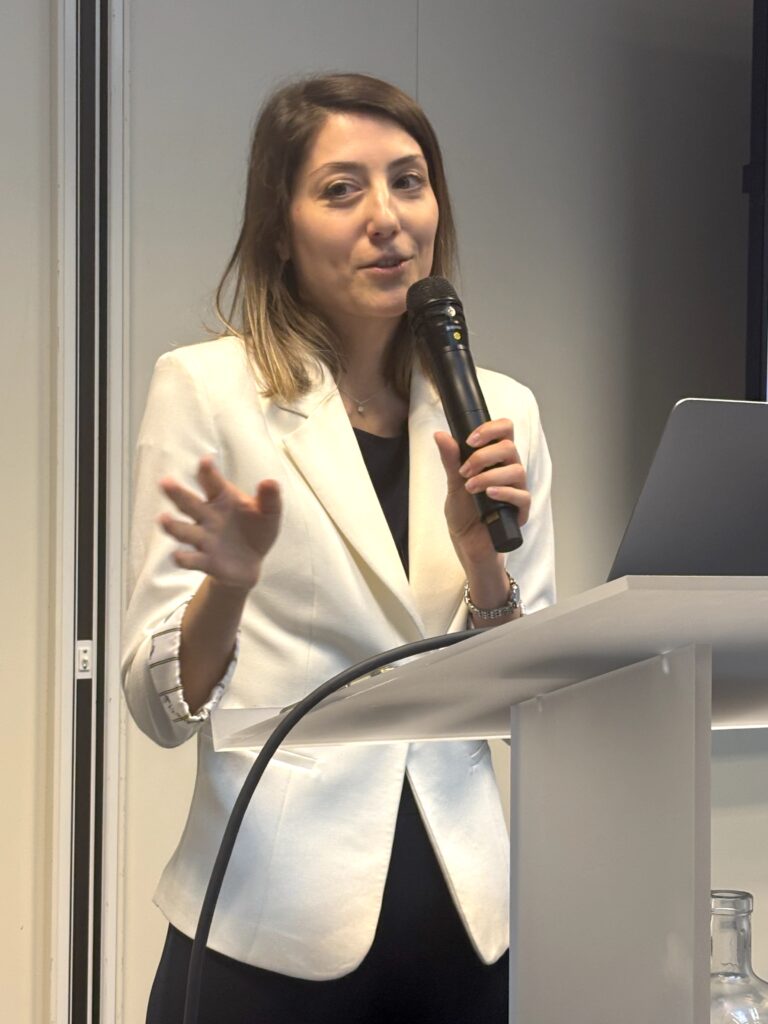
More information about this pilot, the RCF-AI tool, the validation method, and the governance of the system can be found below:
Next steps
The session prompted many questions and active engagement from the audience. For us, this confirmed that there is clear interest in practical follow up.
We envision the next phase as a collaboration with interested water authorities, in which we analyse potential outliers, add additional drivers where needed, and further validate the approach for each water authority. If successful, this approach could develop into a structural solution that is updated periodically and used continuously for new projects.
Interested in discussing this further or joining a potential frontrunner group? Please feel free to contact us.

